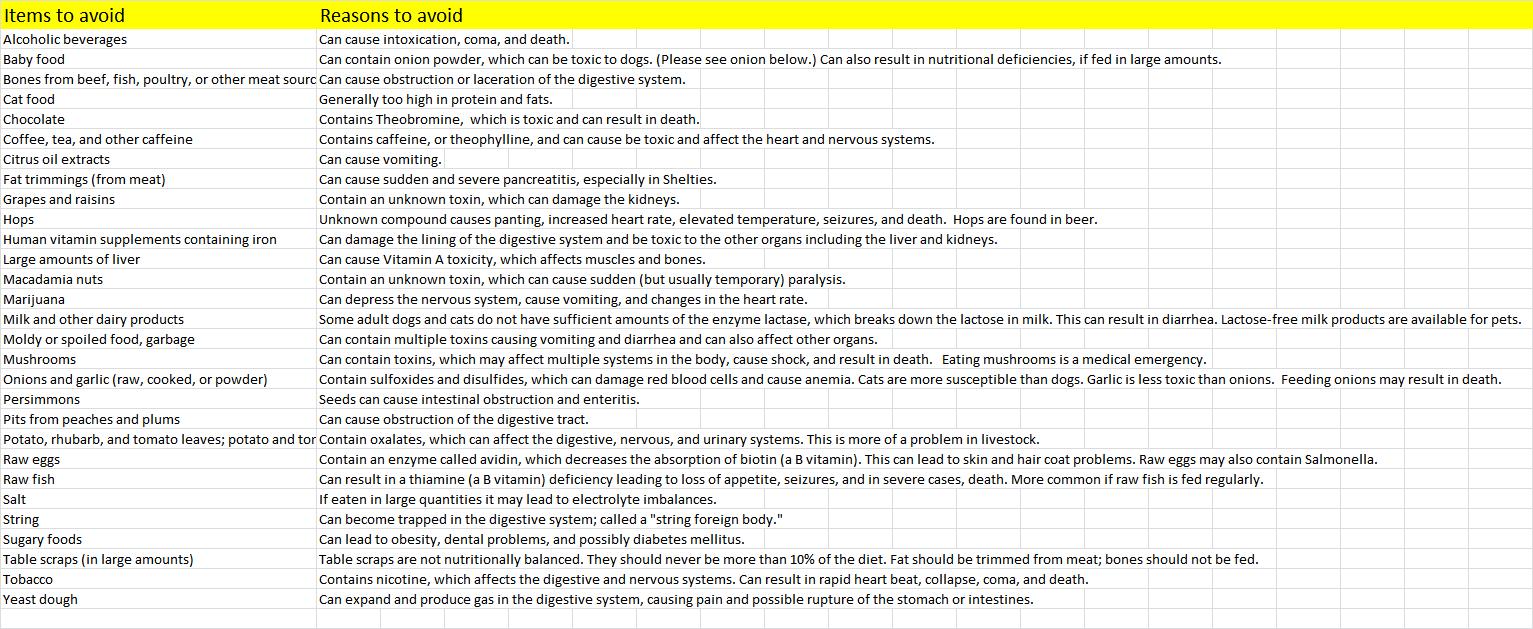
| Items to avoid |
Reasons to avoid |
| Alcoholic beverages |
Can cause intoxication, coma, and
death. |
| Baby food |
Can contain onion powder, which can
be toxic to dogs. (Please see onion below.) Can also result in
nutritional deficiencies, if fed in large amounts. |
| Bones from beef, fish,
poultry, or other meat sources |
Can cause obstruction or laceration
of the digestive system. |
| Cat food |
Generally too high in protein and
fats. |
| Chocolate |
Contains Theobromine, which is
toxic and can result in death. |
| Coffee, tea, and other caffeine |
Contains caffeine, or theophylline,
and can cause be toxic and affect the heart and nervous systems. |
| Citrus oil extracts |
Can cause vomiting. |
| Fat trimmings (from meat) |
Can cause sudden and severe
pancreatitis, especially in Shelties. |
| Grapes and raisins |
Contain an unknown toxin, which can
damage the kidneys. |
| Hops |
Unknown compound causes panting,
increased heart rate, elevated temperature, seizures, and death.
Hops are found in beer. |
| Human vitamin supplements containing
iron |
Can damage the lining of the
digestive system and be toxic to the other organs including the
liver and kidneys. |
| Large amounts of liver |
Can cause Vitamin A toxicity, which
affects muscles and bones. |
| Macadamia nuts |
Contain an unknown toxin, which can
cause sudden (but usually temporary) paralysis. |
| Marijuana |
Can depress the nervous system,
cause vomiting, and changes in the heart rate. |
| Milk and other dairy products |
Some adult dogs and cats do not have
sufficient amounts of the enzyme lactase, which breaks down the
lactose in milk. This can result in diarrhea. Lactose-free milk
products are available for pets. |
| Moldy or spoiled food, garbage |
Can contain multiple toxins causing
vomiting and diarrhea and can also affect other organs. |
| Mushrooms |
Can contain toxins, which may affect
multiple systems in the body, cause shock, and result in death.
Eating mushrooms is a medical emergency. |
| Onions and garlic (raw,
cooked, or powder) |
Contain sulfoxides and disulfides,
which can damage red blood cells and cause anemia. Cats are more
susceptible than dogs. Garlic is less toxic than onions.
Feeding onions may result in death. |
| Persimmons |
Seeds can cause intestinal
obstruction and enteritis. |
| Pits from peaches and plums |
Can cause obstruction of the
digestive tract. |
| Potato, rhubarb, and tomato leaves;
potato and tomato stems |
Contain oxalates, which can affect
the digestive, nervous, and urinary systems. This is more of a
problem in livestock. |
| Raw eggs |
Contain an enzyme called avidin,
which decreases the absorption of biotin (a B vitamin). This can
lead to skin and hair coat problems. Raw eggs may also contain
Salmonella. |
| Raw fish |
Can result in a thiamine (a B
vitamin) deficiency leading to loss of appetite, seizures, and in
severe cases, death. More common if raw fish is fed regularly. |
| Salt |
If eaten in large quantities it may
lead to electrolyte imbalances. |
| String |
Can become trapped in the digestive
system; called a "string foreign body." |
| Sugary foods |
Can lead to obesity, dental
problems, and possibly diabetes mellitus. |
| Table scraps (in large amounts) |
Table scraps are not nutritionally
balanced. They should never be more than 10% of the diet. Fat should
be trimmed from meat; bones should not be fed. |
| Tobacco |
Contains nicotine, which affects the
digestive and nervous systems. Can result in rapid heart beat,
collapse, coma, and death. |
| Yeast dough |
Can expand and produce gas in the


digestive system, causing pain and possible rupture of the stomach
or intestines. |