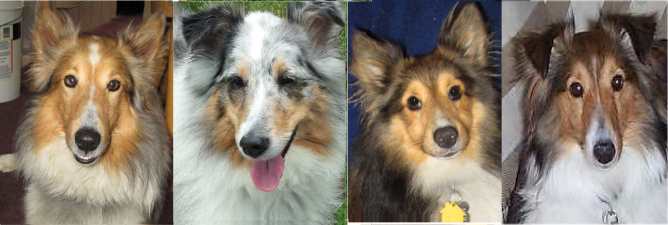


Housetraining your Sheltie will be a very simple, easy process IF you take the time and follow the rules. Here are some suggestions to make this important training period a success.
Buy a crate and during the first few weeks, keep your puppy in it whenever you are not playing, holding, or watching him explore his new surroundings. Spend as much time as you can with your pet, but when you can't watch him, crating him can prevent mistakes from occurring. It is easier to prevent a bad habit from starting, than it is to break it. Dogs are "den animals" and a crate will also be considered a "safe" place.
THE most important factor in this housetraining business is to know that dogs by nature will not *potty* where they must sleep. This one simple fact is what will make or break your housetraining efforts. With a crate, dogs learn that they can control their urge to eliminate until the proper time and situation.
Note: Dogs from a Pet Store...ie: "puppy mill" or a "kennel" are used to pottying in their crate,,,,so this process WILL be more difficult.
Establish a schedule and don't deviate from it. The "when" and "how" you housetrain needs to be consistent so make sure all family members follow the same guidelines. Pick a soiling spot in your yard and take your pup there on a lead when it is time to eliminate. The odor from previous visits to this spot will stimulate the urge to defecate and/or urinate. Many new owners confuse their pup by using different words for the same command. In the housebreaking process, it is a good idea to use the same word like "outside" every time you take the puppy out to eliminate. Consistent use of a word with an activity will help to build a level of communication between you and your pup. Later, while you are watching television and notice your pup staring at you, you can say the word "outside" and your pup will go to the door.
Routine Routine Routine -- and did we mention routine? Dogs are very routine oriented. Once you get them into a routine, you are almost done.
Be patient. Dogs cannot control their bladder or bowels until they are around 4 months old. Be very careful not to expect more from a puppy than he can do. 16 weeks is the magic number. IF you have success before that, then wonderful!! However do not push to hard before that age. NEVER punish a puppy or dog for an accident. A dog does not know that it is *where* they went that upset you. The puppy will simply learn to be afraid to *potty* in front of you. That can make things difficult when traveling with your dog on a leash.
The "signs". As soon as you see puppy pacing, sniffing as he walks around in circles, or trying to sneak away (if he's out of the crate), take him outside. These are telltale signs that he needs to relieve himself. Say "Outside" each time you take your puppy out so you can develop communication and understanding between you and your pet. Puppies almost always urinate or defecate more than once or in one outing, and not always right away. Don't distract your pup from the job at hand. This is a business trip, not social time. Puppies will usually "go" more than once in the morning and then several more times throughout the day.
Praise them for their success when the job is done.
Don't mix business with pleasure. When your pup has finished, take him back inside, even just for a minute or two. When you come back inside, spend some time with your pup. You know there is little chance the pup will have to eliminate for a while so play with them and have a good time. The more time you spend with the pup the better it is. Remember they are still young and need to act like a pup, developing and learning about their new situation and environment. When you're finished, take one more trip outside and place the pup back in its cage or crate.
Fact: Puppies usually *potty* right after eating.
The key to housetraining is you. Spend as much time with your puppy as possible during the first two to three months your puppy is home. Be consistent, patient, praise when appropriate, and be willing - for however long it takes - to invest the time and energy necessary to make this important training time a success.
Establishing a schedule is important. Dogs are creatures of habit; they like to eat, sleep, and relieve themselves on a regular schedule. Establishing and maintaining a schedule is easy to do and gets easier as your puppy grows. Pay attention to your dog's behavior so you can develop a schedule that works for both of you. First, learn when your dog naturally defecates in the morning, at night, 30 minutes after eating, etc. Look at your schedule and determine what compromises need to be made to make this workable for everyone.
House Training Your Dog or Puppy